Call to adopt mining values and principles in East Africa

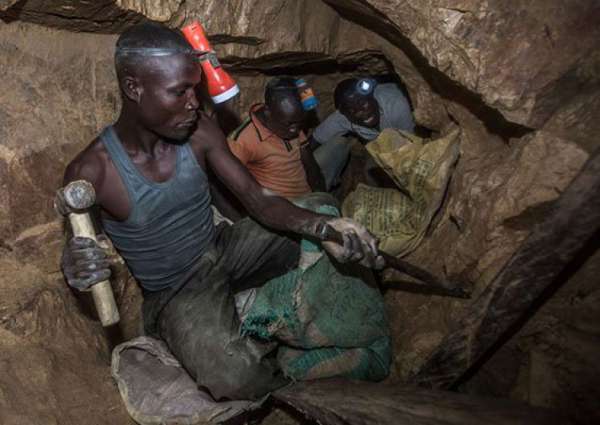
Artisanal gold miners at a mine in Olini, Migori, Kenya. Across Africa, communities have been sidelined in giving their input before consent is given and a mining license issued. PHOTO | AMANDA FISHER 

East African Community countries have been challenged to fully adopt African Mining Vision (AMV) principles and values that outline transparent, equitable and optimal exploitation of mineral resources in the region.

The AMV, which was formally adopted by African heads of state in 2009, has not achieved its target as member countries are struggling with illicit financial flows, lack of mineral value addition and poverty among communities living in mining areas.

Regional civil society organisations initiated a project to push the East African Legislative Assembly to adopt the AMV values that call for free prior informed consent and transparency in mining agreements and revenues accrued from extractives, among other principles.

The Natural Resources Alliance of Kenya, Uganda-based Africa Freedom of Information Centre (AFIC) and Tanzania’s Haki Madini have partnered to popularise the document.

Haki Madini programme officer Oliver Balilo said there is a need to educate communities where minerals have been discovered before they give consent.

Source:The East African 
Budget cuts in Critical Sectors to Impact on Service delivery -CSOs

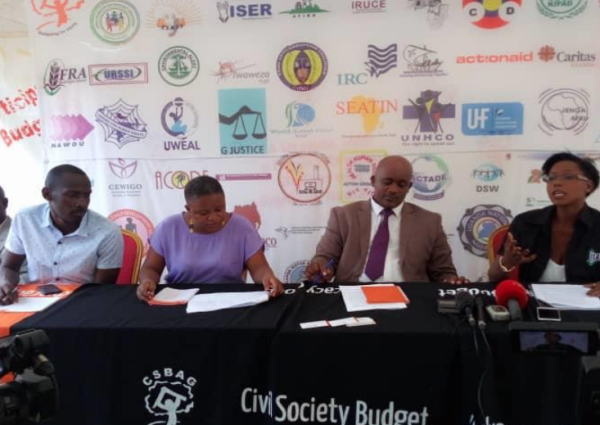
Civil Society Organizations (CSOs) under their umbrella body, Civil Society Budget Advocacy Group (CSBAG);  Water Governance Institute (WGI) is a Member , have expressed concern about budget cuts in critical sectors for the financial year 2019/2020 saying it will impact negatively on service delivery.

Addressing a press conference at CSBAGs offices in Kampala last week, the CSOs cited critical sectors such as agriculture, water and environment and health as well as social development.

Read the Statement below;

CSO PRESS STATEMENT ON THE MINISTERIAL POLICY STATEMENTS FY 2019/20 BUDGET

Theme: Public Funding for service delivery still a bumpy ride! The FY 2019/20 Budget outlook!

Date: 31st March 2019| Venue: CSBAG Secretariat | Time: 10:00am –11:30am

  1. We the Civil Society Organizations under the Civil Society Budget Advocacy Group (CSBAG) are gathered here today to share our views on how the FY 2019/20 budgetis likely to reduce inequality and poverty through funding service delivery. We understand that the current budget theme is, “Industrialization for Job Creation andProsperity” which connects very well with the challenges and needs of an ordinary Ugandan.
  2. For an ordinary person to benefit from service delivery, it’s critical that government funds the sectors that have a direct linkage with their livelihood. We therefore appreciate and applaud the long awaited Soroti Fruit Factory which started production early this month and so far, 4,053 (58% of them are women) farmers have been trained in agronomic practices and cooperative management.
  3. We are also happy that tea factories in Kabale, Kisoro, Zombo and Nebbi were commissioned and the Atiak Sugar factory is also in the offing. The District Urban, Community and Access Roads maintenance has continued to be mainstreamed where over 100KMs of interconnectivity roads were rehabilitated in various districts. We also appreciate the completion of Elugu One Stop Boarder post and the implementation of the Buy Uganda Build Uganda (BUBU) policy, which has continued to increase the Ugandan products on super market shelves, e.g. beverages, textile and footwear. The commissioning of Isimba dam is another positive aspect that is hoped to increase the electricity access currently at 26% and augment the rural electrification program.
  4. The Launch and implementation of the Public Finance Management Reform strategy is another milestone in reforming the budget process to address key service delivery issues. It is our hope that these reforms can address financing of Local Government, enhancing fiscal decentralisation and increasing citizen participation in the planning and budgeting process.
  5. In the same breadth, we acknowledge government effort to make the FY 2019/20 budget people centered. As a result of the citizens engagement on the National Budget Framework Paper FY 2019/20, 25 of the citizen proposals were adopted in the Parliamentary committee reports and we are looking out for their transition in the draft budget for the FY 2019/20 during the committee deliberations.

Major Concerns:

  1. There is progress made in the last three and a half years of the National Development Plan II implementation thoughthere are still concerns in budget funding and implementation that are constraining service delivery.Despite the FY 2019/20 budget increasing to UGX 37,624.6[1] billion from UGX 32,702.8 billion in the FY 2018/19, we strongly feel that several service delivery issues that have a direct impact on an ordinary person’s livelihood are likely not to be addressed.
  1. The NAADS budget is to reduce from UGX 244.84bn in FY 3018/19 to UGX 94.85bn in FY 2019/20. We hope that this reduction and reallocation is in response to public outcry of the obvious and observed wastage we witnessed in the purchase and distribution of agriculture inputs.
  2. The Water and Environment sector budget is set to reduce to UGX 523.29bn from UGX 825bn in the FY 2018/19 largely due to a reduction in external financing. Even when Government increased its development budget to the sector, external financing remains a critical influencer of the sector financing, holding 52.5% of the sector budget.
  3. For Social Development, Government reduced its development budget from UGX 114.28bn to UGX 42.34bn all coming from the Ministry of Gender, Labour and Social Development (MGLSD) and creating a Local Government expenditure gap of UGX 33.18bn. This move could be linked with the decision to move Youth Livelihood Programme funds from the MoGLSD to Local Government and State House. This has implications on the management of the Youth Livelihood Programme since it’s a revolving fund and the level of politics in State House is too much to manage such funds.
  4. Poor funding for critical sector programmes:We are concerned about the targets set by the Ministries, Department and Agencies(MDAs) for implementation under the Program Based Budgeting (PBB). The crucial targets in these sectors are not addressed for example in the Social Development sector, the community development activities in Local Governments have a funding shortfall of UGX 32.36 billion, Primary Health Care (PHC) has a funding gap of UGX 17bn, and funding to agriculture extension in the agriculture sector where only 3,827 workers are recruited against the target of 5,000 extension workers required leaving several districts, especially the new ones with no extension workers. For the health sector, we have identified a total of UGX 10.8 billion that can be channeled to address the PHC shortfall drawn from UGX 1.9 billion to allowances, 1.9 billion to printing and photocopying and 7.0 billion to travel abroad.
  5. As the need for land for investment and developmentis rising, we are witnessing increasing challenges including evictions among others. We are concerned that the Lands, Housing and Urban Development Sector is only projected to receive only UGX 168.25 billion in FY 2019/20. Worse still, the Land Management and Administration sub sector meant to address the public outcries on land has only been allocated UGX 14.862 billion and that the highly celebrated Land Information System (LIS) and the constructed Ministry Zonal Offices (MZOs) are likely to collapse as the Ministry is experiencing a funding gap of UGX 6.7 billion for maintenance.
  6. Duplication of government programmes: Government of Uganda has livelihoods programmes in place aimed at creating employment and alleviating poverty among the youth specifically the Youth Livelihoods Programme (YLP) and the Youth Venture Capital. It is however of concern that these projects are duplicated as they target the same clientele – the youth. There is need for harmonization of these programmes to enable easy tracking of their impact.
  7. Despite the Government of Uganda (GoU) progress in decentralisation, we have witnessed recentralization practices and legally devolved functions being implemented by the Central Government, financed through subventions. The examples include procurement of drugs, text books and well as various centrally managed projects like Northern Uganda Social Action Fund (NUSAF), Vegetable Oil Development Project, and the Karamoja Development Integrated Program. In the FY 2017/18 alone, UGX 1.9 trillion constituted subventions for Local Governments as compared to UGX 2.8 trillion which was the total Local Government budget. Because of these inconsistencies, capacity at Local Government level continues to diminish and as such the local Government determined share of national cake has also continued to diminish. Despite a miserable increase of 1% LG share to the national budget, from 12.4% to 13.6% between FY 2018/19 and 2019/20, the real per capita value of Non-Wage and development transfers has significantly reduced over the last 15 years. The Local Government transfers declined by 13% from a peak of UGX 80,303 in 2002/03 to UGX 69,858 in the FY 2017/18.

Economic Management issues

  1. We continue to get worried about the rate at which interest payments for debt (domestic and external) obligations are crowding out expenditure for the social and other critical sectors. In the FY 2019/20 the interest payments will once again be 2ndlargest recipient of the overall budget with UGX 3,075.61bn(10.6% of the FY2019/20 budget). This is an increase of UGX 561.5bn from the FY 2018/19 position.
  2. Misuse of Supplementary budgeting provisions under the PFMA, 2015: We note with concern that up to date, government has not been able to adhere to the PFMA regulation 18 (3) which stipulates that any supplementary expenditure should be un avoidable, unabsorbable and unforeseeable. According to Schedule 1 – UGX 466.388bn and Schedule 2 – 403.576bn and Schedule 3 – 758.839bn, several expenditures do not qualify for supplementary expenses. There is UGX 33.87bn approved for salary enhancements for various universities, UGX 2.28bn for Soroti University for Student enrolment, UGX 60.212bn for e -passports and UGX 1.2bn to the education service commission for recruitment of 3000 education service staff. To keep the integrity of planning and budgeting in Uganda, we call upon Ministry of Finance to reject request for supplementary expenditure that are not in line with our laws and frameworks.
  3. Poor quality and late submission of Ministerial Policy Statements (MPS): Given the requirement in Section 13(13) of the Public Finance Management Act 2015 for MDAs to submit their MPS by the 15th of March, 34 MDAs had not been submitted their MPS to Parliamentby the 24th of March 2019. Furthermore, those who have submitted to Parliament, have submitted drafts that cannot be a basis for approval and quality assessment. This delays other processes like the issuance of the Certificates of Compliance by the Equal Opportunities Commission and NPA respectively. By not adhering to specific provisions of the PFMA violates Sec 79 (1) (e) and we demand that MDAs adhere to the timelines of the law and provide quality documents as required otherwise we shall be forced take legal action against errant MDAs.
  4. Neglecting climate change financing at the expense of the Small-Scale Farmers. The increased frequency and intensity of extreme climate related occurrences such as droughts and floods, as well as unpredictable seasons, has adverse effects to Uganda that largely depends on rain-fed agriculture. For example, Nakasongola among other districts has been badly hit by drought, scores of cattle die daily due to lack of water and pasture. Press reports show that a kilogram of meat now costs UGX 1,000, down from UGX 10,000, while a cow goes for as low as UGX 50,000. Furthermore, Uganda’s ratio of cultivated area under irrigation to the irrigation potential is only 0.5%, which compares lowly to 3.6% for Tanzania,2.0% for Kenya and 1.6% for Burundi.For effective financing, we call upon the Ministry of Finance to expedite the process of climate change budget tagging to ensure efficient planning and budgeting for climate change interventions.
  5. Lack of targeted funding and sectoral leadership for Menstrual Hygiene Management (MHM) especially in primary schools which affects girls’ learning:To put in place inclusive girl-friendly sanitation, water infrastructure and disposal facilities, the Ministry of Water and Environment intends to construct sanitation facilities in schools with separated stances for boys and girls, teachers and access rumps for the disabled and incinerators. However, the allocated budget of UGX 0.1bn for FY 2019/20 is way too insignificant to even demonstrate best practice for scale-up of girl-friendly MHM in schools across the country. We highly recommend that the Ministries of Education, Water and Health introduce a specific vote function in each of the three ministries disaggregated by sector mandates on sanitation.
  6. High cost of electricity leading to low access among the Ugandan population:The total access to electricity is 26.7% and only 2% of this is to the rural population. The high cost of electricity has hampered access to electricity especially by the very poor. According to UMEME, the approved new tariffs for 2019 are UGX 769/kwh for domestic consumers, UGX 884.8/kwh for commercial consumers and UGX 790.8/kwh for medium industrial consumers. This implies that despite the heavy investment in the hydro power generation many Ugandans are not directly benefiting from the hydro electricity generation gains the country has made. With the commissioning of Isimba dam, we propose a deliberate government effort to rationalize the cost to electricity to increase both access and affordability.
  7. In conclusion, the above areas highlighted as some of what we wanted to highlight but we shall continue to engage the relevant sector committees of Parliament to seek redress to these gaps. As Uganda registers positive macroeconomic indicators in FY 2018/19 and while the government hopes to consolidate the gains in the previous year, Government should consider sequencing infrastructure development to allow room for effective financing arrangements. Finally, as we approach the 2020, the middle-income status targets appear far in the horizon; prudent fiscal management is required with realistic targets for us to achieve these aspirations.

FOR GOD AND OUR COUNTRY

This statement was jointly produced by the following Partners

  1. Development Initiatives (DI)
  2. Advocates Coalition for Development and Environment (ACODE)
  3. Uganda Debt Network (UDN)
  4. Rwenzori AnticorruptionCoalition (RAC)
  5. Economic Policy Research Centre (EPRC)
  6. Eastern and Southern Africa Small Scale Farmers’ Forum (ESAFF)
  7. The Hunger Project
  8. Volunteers Effort for Development Concern (VEDCO)
  9. Food Rights Alliance (FRA)
  10. TWAWEZA
  11. Action Coalition in Climate Change
  12. Water Governance Institute
  13. Environmental Management for Livelihood Improvement
  14. Natural Resources Governance Institute
  15. Coalition for Health Promotion and Social Development (HEPS)
  16. World Vision Uganda
  17. Church of Uganda Teso Dioceses Planning and Development Office (TEDDO)
  18. National Union of Disabled Persons of Uganda (NUDIPU)
  19. Action for Development (ACFODE)
  20. Women and Girls Child Development Association (WEGCDA)
  21. Africa Youth Development Link (AYDL)
  22. Southern and Eastern Africa Trade Information and Negotiations Institute (SEATINI)
  23. Private Sector Foundation Uganda (PSFU)
  24. Climate Action Network – Uganda (CAN – U)
  25. Beacon of Hope Uganda
  26. Environmental Alert
  27. WaterAid
  28. International Water and Sanitation Centre (IRC)
  29. CCEPD
  30. Center for Domestic Violence Prevention (CEDOVIP)
  31. Pan African Climate Justice Alliance- (PACJA)- UGANDA

Samples of March 2019 Aquaponics project harvests

One of the beneficiaries of the WGI Aquaponics Project ,Mrs Alice barisigara AKA “Maama Money bag” Jubilates as she harvests fish from one of the Units. This happened on 25th March 2019. Below are screen shoots of some of the beneficiaries testimonies. 

Uganda cleared to join extractive initiative

Kampala: Cabinet has finally given government the go-ahead to join the Extractive Industries Transparency Initiative (EITI) , a move it said would improve accountability in the management of natural resources.


Though not clear on when Uganda government will finally put in its request to join the initiative, the decision caps years of lobby by non-governmental organisations working in the extractive sector that have always pushed for more transparency in government dealings with companies, particularly in the oil sector.


Uganda government has in the past come under intense pressure and scrutiny over its secretive dealings in the oil contracts negotiations and a number of Cabinet ministers were accused of accepting bribes from potential investors.


During the weekly Cabinet briefing on Tuesday at the government Media Centre, the government spokesperson, Mr Ofwono Opondo, said the Cabinet’s decision is intended to improve the revenue collection process and boost public finances and minimise oil, gas and mining revenues being mismanaged or lost to corruption.


“The country will benefit through improved investment climate by giving a clear signal to investors and international financial institutions that the government is committed to improving transparency, which in turn can lead to increased investment in the cuntry,” Mr Opondo said.


He also said the decision will assist in strengthening licensing and record keeping; improve corporate risk management and governance and promote accountability.


Uganda has proven crude oil reserves of 6.5 billion barrels, about 2.2 billion of which is recoverable. 
Uganda approved Field Development Plans in August 2016 to develop the first 1.2 billion barrels of oil. 


Government also agreed an export route through Tanzania to the Port of Tanga and a recent meeting between the countries set April this year to finalise all the paperwork and start the necessary work.


The Energy minister, Ms Irene Muloni, could not be reached for clarifications on when Uganda will join the initiative. 
Her junior, the State minister for Mineral Development, Mr Peter Lokeris, was also unavailable for a comment.