

21
Jul, 2020

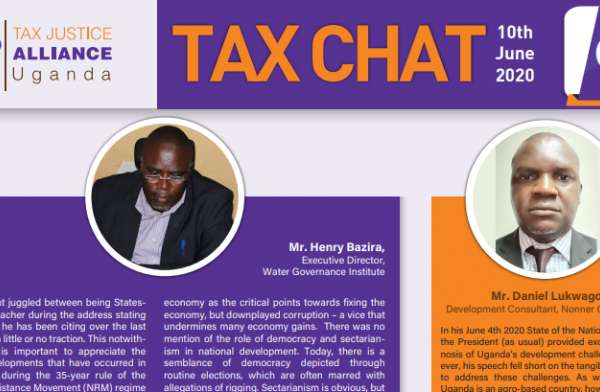
On Thursday 4th June 2020, the president of Uganda delivered the State of the Nation Address (SONA). This is in fulfillment of the Constitutional requirement under Article 101 (1) of the Constitution of the Republic of Uganda; The President shall, at the beginning of each session of Parliament, deliver to Parliament an address on the state of the nation. We bring you stakeholder’s perspective on the SONA.
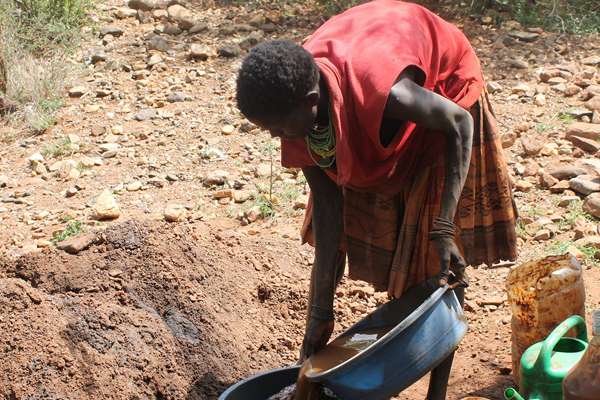
From the picture above;
Gold mining in moroto; Nakong Rita trying to Sluice gold from the ore using Water.
In the intricate dance between man and nature, minerals stand as silent witnesses to the eons of geological evolution. Yet, beyond their stoic presence, minerals offer a bounty of resources essential for human advancement. From the depths of the earth’s crust to the expansive reaches of the ocean floor, humanity has long engaged in the art of mineral harvesting.
Mining, the age-old practice of extracting valuable minerals from the earth, represents just one facet of this intricate process. Whether it’s the gleam of precious metals like gold and silver, the industrial prowess of iron and copper, or the transformative power of rare earth elements, mineral harvesting forms the bedrock of modern civilization.
But the quest for minerals extends beyond terrestrial confines. With advancements in technology and exploration, humanity has turned its gaze to the depths of the ocean, where vast reserves of valuable minerals lie waiting to be unearthed. From polymetallic nodules scattered across the abyssal plains to hydrothermal vents teeming with precious metals, the ocean floor holds untold riches for those bold enough to venture into its depths.
Yet, as we delve deeper into the realm of mineral harvesting, we are confronted with ethical and environmental considerations. The extraction of minerals often comes at a cost, whether it be the displacement of communities, the destruction of ecosystems, or the depletion of finite resources. As stewards of the planet, it is imperative that we approach mineral harvesting with caution and foresight, striving for sustainable practices that minimize harm to both the environment and society.
In the ever-evolving tapestry of human endeavor, mineral harvesting remains a crucial chapter, weaving together history, science, and innovation. As we continue to unlock the secrets of the earth’s vast mineral wealth, let us do so with reverence and responsibility, mindful of the delicate balance that sustains life on this planet.”
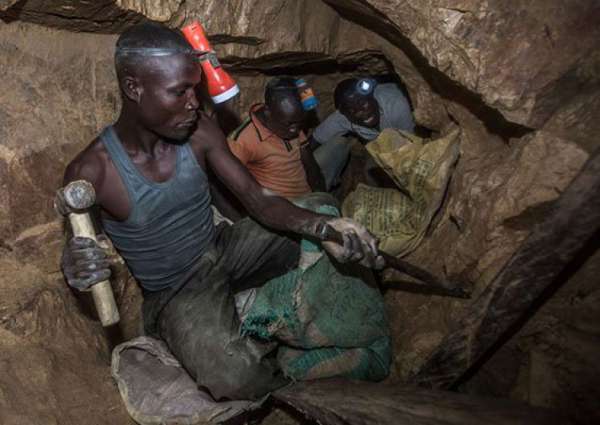
Artisanal gold miners at a mine in Olini, Migori, Kenya. Across Africa, communities have been sidelined in giving their input before consent is given and a mining license issued. PHOTO | AMANDA FISHER
East African Community countries have been challenged to fully adopt African Mining Vision (AMV) principles and values that outline transparent, equitable and optimal exploitation of mineral resources in the region.
The AMV, which was formally adopted by African heads of state in 2009, has not achieved its target as member countries are struggling with illicit financial flows, lack of mineral value addition and poverty among communities living in mining areas.
Regional civil society organisations initiated a project to push the East African Legislative Assembly to adopt the AMV values that call for free prior informed consent and transparency in mining agreements and revenues accrued from extractives, among other principles.
The Natural Resources Alliance of Kenya, Uganda-based Africa Freedom of Information Centre (AFIC) and Tanzania’s Haki Madini have partnered to popularise the document.
Haki Madini programme officer Oliver Balilo said there is a need to educate communities where minerals have been discovered before they give consent.
Source:The East African
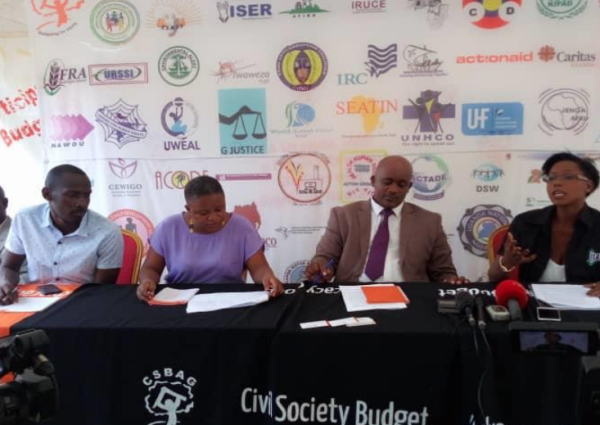
Civil Society Organizations (CSOs) under their umbrella body, Civil Society Budget Advocacy Group (CSBAG); Water Governance Institute (WGI) is a Member , have expressed concern about budget cuts in critical sectors for the financial year 2019/2020 saying it will impact negatively on service delivery.
Addressing a press conference at CSBAGs offices in Kampala last week, the CSOs cited critical sectors such as agriculture, water and environment and health as well as social development.
Read the Statement below;
CSO PRESS STATEMENT ON THE MINISTERIAL POLICY STATEMENTS FY 2019/20 BUDGET
Theme: Public Funding for service delivery still a bumpy ride! The FY 2019/20 Budget outlook!
Date: 31st March 2019| Venue: CSBAG Secretariat | Time: 10:00am –11:30am
Major Concerns:
Economic Management issues
FOR GOD AND OUR COUNTRY
This statement was jointly produced by the following Partners

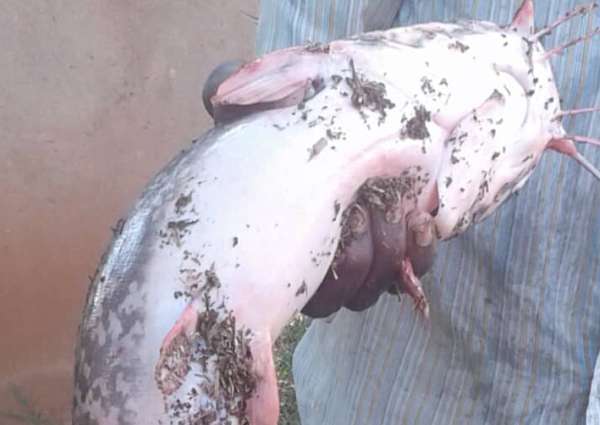
One of the beneficiaries of the WGI Aquaponics Project ,Mrs Alice barisigara AKA “Maama Money bag” Jubilates as she harvests fish from one of the Units. This happened on 25th March 2019. Below are screen shoots of some of the beneficiaries testimonies.


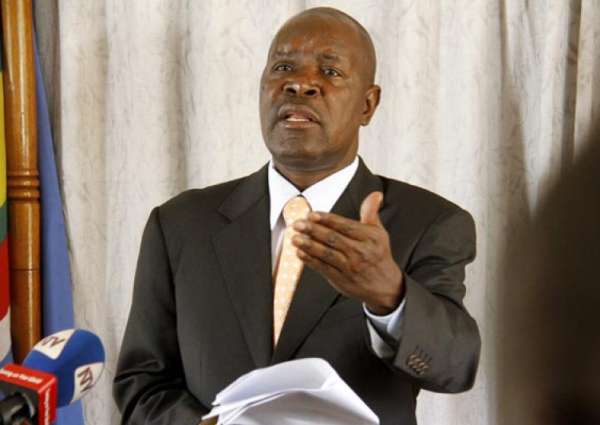
Kampala: Cabinet has finally given government the go-ahead to join the Extractive Industries Transparency Initiative (EITI) , a move it said would improve accountability in the management of natural resources.
Though not clear on when Uganda government will finally put in its request to join the initiative, the decision caps years of lobby by non-governmental organisations working in the extractive sector that have always pushed for more transparency in government dealings with companies, particularly in the oil sector.
Uganda government has in the past come under intense pressure and scrutiny over its secretive dealings in the oil contracts negotiations and a number of Cabinet ministers were accused of accepting bribes from potential investors.
During the weekly Cabinet briefing on Tuesday at the government Media Centre, the government spokesperson, Mr Ofwono Opondo, said the Cabinet’s decision is intended to improve the revenue collection process and boost public finances and minimise oil, gas and mining revenues being mismanaged or lost to corruption.
“The country will benefit through improved investment climate by giving a clear signal to investors and international financial institutions that the government is committed to improving transparency, which in turn can lead to increased investment in the cuntry,” Mr Opondo said.
He also said the decision will assist in strengthening licensing and record keeping; improve corporate risk management and governance and promote accountability.
Uganda has proven crude oil reserves of 6.5 billion barrels, about 2.2 billion of which is recoverable.
Uganda approved Field Development Plans in August 2016 to develop the first 1.2 billion barrels of oil.
Government also agreed an export route through Tanzania to the Port of Tanga and a recent meeting between the countries set April this year to finalise all the paperwork and start the necessary work.
The Energy minister, Ms Irene Muloni, could not be reached for clarifications on when Uganda will join the initiative.
Her junior, the State minister for Mineral Development, Mr Peter Lokeris, was also unavailable for a comment.
WGI’s Aquaponics project gets featured in the International Water Resources Association‘s 2018 report on Smart Water Management. The report showcases 10 Smart Water Management (SMW) case studies from around the world, and 9 upcoming SWM projects from both developed and developing countries, to demonstrate the potential for SWM in both developed and developing countries. The report provides an in depth look at how these SWM projects were implemented, the enabling factors and potential barriers faced, and how SWM can assist with achieving the Sustainable Development Goals.
Read more
IWRA is glad to announce the publication of the joint Smart Water Management (SWM) Case Study Report in collaboration with K-water. This report showcases 10 SWM case studies from around the world, and 9 upcoming SWM projects from both developed and developing countries, to demonstrate the potential for SWM in both developed and developing countries. The report provides an in depth look at how these SWM projects were implemented, the enabling factors and potential barriers faced, and how SWM can assist with achieving the Sustainable Development Goals. Based on cross case analysis, the report looks at the potential for SWM replication and scalability, and provides policy recommendations to assist decision-makers with supporting future SWM implementation.
Access below the full SWM report as well as the collection of case studies, individual text boxes, and a shorter version of the SWM report:
– The full report in high resolution (89 MB)
– The full report in low resolution (21 MB)
– The individual SWM case studies: K-HIT / Seosan / Paju / Paris / China / FDMT / Mexico / Africa / Canada / Europe
– The individual text boxes: Azerbaijan / Bali / Uganda / India / Bolivia / Argentina / India / Pakistan / Australia
– The brief report (Executive Summary, Introduction, Analysis/Discussion, Conclusion and References)
The Executive Summary of this report was previously launched at KIWW 2018 on September 14th in a highly engaged session focusing on “Smart Water Management Case Study Lessons from Around the World” with speakers and panellists from IWRA, K-water, IWA, the University of South Australia, and Gomal Damaan Area Water Partnership. The session presented the key findings from the SWM project, including sharing four case studies from the report.
Uganda and the three main oil companies – Total E&P, Cnooc, and Tullow Oil – are torn over where to register the holding company for the East Africa Crude Oil Pipeline, a deadlock that has partly created a delay in the signing of the Host Government Agreement, and ultimately the Final Investment Decision, writes JEFF MBANGA.
According to a secret memo that the ministry of Energy and Mineral Development drafted for cabinet in September, a copy of which The Observer has seen, the three oil companies want the holding company for the East Africa Crude Oil Pipeline Company (EACOP) incorporated in the United Kingdom with branches in Uganda and Tanzania, while government wants the company incorporated in Uganda.
Another stalemate is the voting rights for the Uganda National Oil Company (UNOC) on key decisions within that company. According to the Production Sharing Agreements that Uganda signed with the oil companies, UNOC is to have 15 per cent participating interest in many infrastructure projects such as the crude pipeline.
It has now emerged that while the three oil companies have no issues with UNOC’s 15 per cent, government is worried that that percentage is not enough to swing key decisions in its favour during the voting process by the shareholders.
The ministry of Energy notes though: “The upstream oil companies prefer to incorporate the EACOP company in the United Kingdom with branches each in Uganda and Tanzania. GoU prefers that the pipeline company is incorporated in Uganda with a branch in Tanzania. However, GoU is willing to consider company incorporation in the United Kingdom provided that it is headquartered in and its major operations are conducted in Uganda.”
It is not hard to see why the oil companies want to have the pipeline company registered in the United Kingdom. The United Kingdom is increasingly being viewed as a tax haven, and companies tend to prefer to incorporate there as a scheme of lowering their tax bills.
Another reason as to why companies prefer to register in places such as the United Kingdom is because of their more predictable legal regime, especially during dispute resolution. Although, Ugandan laws allow for disputes in the oil industry worth more than $7 million to be settled in an international court of arbitration.
But even when it comes to these international arbitrations, Uganda and the oil companies disagree on which court should hear the cases. The three oil companies prefer to settle disputes at the International Centre for Settlement of Investment Disputes (ICSID), which is located in Washington, USA, while the Uganda government wants London Court of International Arbitration. Uganda’s opposition to the Washington court, according to the memo, is “due to the fact that many states consider it unfair to state parties and this is primarily why several states in South America have withdrawn from ICSID.”
Already, the oil companies say they want the terms and conditions in the Host Government Agreement (HGA) to be governed by English law. However, government wants the HGA to be government by Ugandan law. The HGA will include clauses such as the responsibilities of both Uganda and Tanzania towards offering security of the project, access to land, respect to human rights, just to mention a few.
What looks hard, though, is pushing for an increase in UNOC’s voting rights. The memo points out that “UNOC will participate in the pipeline company as a minority shareholder (15%), but as the shipper of Government’s share of crude oil which is the majority shipment of the pipeline, UNOC should have an affirmative vote on key decisions of the pipeline company such as budgets and work programs, major capital investments and choice of operator.”
It adds: “This would enhance GoU’s national content objectives, among others. On the other hand, however, the upstream oil companies are opposed to UNOC having an affirmative vote.”
Last week, we wrote how the oil companies and government had divergent views on the amount of oil resources that should be shared between the oil pipeline and the refinery. We pointed out that the oil companies wanted all the available oil resources to be directed towards the pipeline at the expense of a delay in commissioning in the oil refinery. Such a delay would make the refinery unviable, government warns.
It now appears there are more contentious issues between the government and the oil companies, all of which could push the much-awaited Final Investment Decision (FID) further back. The FID is seen as the key agreement that will activate huge cash investments into the oil industry.
According to the memo, the issue surrounding land rights for the pipeline is not resolved either. The route of the crude oil pipeline from Hoima in western Uganda to the Chongoleani peninsula in Tanzania is expected to cut across major infrastructure such as power lines, roads and a railway line, among others. Institutions such as the Uganda Electricity Transmission Company Limited own the rights over some of the land where power lines are located.
Now the oil companies want full rights over any land where the crude oil pipeline will pass. Government says that might not be possible. Instead, government says it will not grant the oil companies their wish of having superior land rights; rather, it will only endorse “rights that facilitate co-existence with other infrastructure.”
Generally, there is a widespread consensus that these disagreements are not too strong for Total E&P, Cnooc, and Tullow Oil to pull the plug on going further with their investments in Uganda. Such a scenario, government warns, would leave Uganda compensating the oil companies $2.5 billion for the investments made in the oil fields to date, and a further $138 million for investments in the crude oil pipeline to date. That is aside from the reputational risk that Uganda would suffer if the oil companies decided to leave the country.
So, this is going to come down to a meeting, expected to be held on December 12, chaired by President Yoweri Museveni. Most of these critical disagreements are expected to be resolved in that meeting.
Analysts we have spoken to believe Museveni is going to stick to the earlier plans of moving ahead with the refinery. Museveni is also expected to stick to current legal framework governing land, as any attempt to offer the oil companies superior rights would lead to an amendment to the land laws.
At the end, government is likely to concede on certain areas such as leaving UNOC to have minority voting rights in the pipeline company.