Difference between Rebate And Discount

The rebate is allowed to customers, when their purchase in quantity or in value, reaches a specified limit. The amount returned to the buyer by the seller, at the time of making complete payment for the purchases is known as a rebate. It is a tool used by the sellers to promote sales in large quantities. The amount of rebate provided to the buyer is pre-decided by the seller. Rebates and discounts also differ in their strategic application.

This tendency towards optimism means that consumers perceive rebate offers as more valuable than they are. And that’s the key for maximizing your promotions budget. A discount is a reduction in the purchase price of a good or service. But you sell that thing for a chunk less than that price.

Difference between Rebate And Discount

One of these techniques is to provide the shoppers with a discount or a discount to purchase more things. Rebate is the most popular approach companies employ to increase their sales when the product’s price is deducted. For instance, a customer may be more likely to purchase a high-end camera that offers a $200 rebate than a less expensive one that has the same features and is $200 less expensive upfront. This is because the customer may feel more satisfied in the long run by knowing that they will receive a refund later. The prices you set can affect the number of sales you get, your profits, and even your brand perception. That’s why it’s so important to make the right pricing decisions for your business.

So, every customer and seller, must be known about the differences between discount and rebate. Remember, the choice between rebates and discounts isn’t a binary one. Depending on your business model and goals, you may find that a combination of both strategies works best for you. It’s all about understanding your customers, your market, and your own business goals, and then choosing the strategy that aligns best with them. While they can attract customers and boost sales, improper execution can lead to a dip in profits and potentially harm your brand reputation.

Types of Rebates:

Schedule a short call to see how Tremendous can save you time, money, and hassle. Dive into the top 10 gift cards and categories by popularity for incentive programs. It’s pretty clear that while these two strategies can get mixed up from time to time, they are very different in the way they operate and are implemented.

What is the Difference Between a Rebate and Discount?

Rebates, on the other hand, involve a partial refund after the sale, requiring customers to meet specific conditions to receive the rebate. This is what encompasses the fundamental difference between a rebate and discount, as purchases are made at full price and the savings occur only after the target is met. This strategy allows you to avoid any of the negative associations of a price cut (whether temporary or permanent) while still reaping the benefits of increased sales. Discount and rebate are commonly used terms in today’s dynamic markets, especially in the e-commerce world. Rebates and discounts are distinct forms of price cuts that directly or indirectly promote the overall sales of a business. Both the terms may sound similar, however, there difference between discount and rebate is some difference between discount and rebate.

  • The rebate might be used to encourage the purchase of several items at once.
  • In this blog post, we will explore the differences between rebates and discounts, including what they are, how they work, and when each strategy is most effective.
  • Discounts and Rebates are both mechanisms used to lower the price of a product or service, but they operate in slightly different ways.
  • They are typically applied at the point of purchase, reducing the buying price for a set duration.

You always receive the full purchase price, and the discount is subsequently reimbursed. A great tool for larger products and returns on things such as taxes and services. Both rebates and discounts can be effective marketing tools for businesses, but which one to prefer depends on the specific goals of the business. Once the store receives the rebate form and verifies the purchase, they will issue a check or credit the customer’s account with the $100 rebate amount. So, in this case, the customer pays the full price of $1,200 at the time of purchase, but they will receive a $100 rebate later, effectively bringing the cost down to $1,100.

Therefore, from the above discussion, it is quite clear that the discount and rebate are two very different things. It is frequently given to the shoppers, to retain them for a long period. Rebate is occasionally given, only to those customers, which fulfils the specific criteria. So, the rebate is not open for every person, but the discount is available to all the customers. Trade discounts are more common in the realm of manufacturers. These occur when manufacturers reduce the retail price of a product when selling to a wholesaler.

One of those strategies is providing a discount or rebate to the shoppers to induce them buy more quantity of goods. The discount is a most common strategy used by the entities to enhance its sales, in which a deduction is made in the price of the product. While both rebates and discounts offer monetary benefits to the purchaser, the primary difference lies in the timing of these benefits. Discounts provide immediate savings at the point of purchase, while rebates offer deferred savings, reducing the cost of a product at a later date. They can be tailored to suit the specific needs and goals of your business.

When you purchase an item, the price you see is not always the final price. Sometimes, retailers offer rebates to incentivize customers to buy their products. A rebate is a refund of a portion of the purchase price that is given after the sale is complete.

Cash Discount – it is provided to encourage early payment. This helps the seller to maintain cash flow and healthy working capital. Trade Discount – It encourages large quantity buying and is mostly provided to resellers. That gives us enough to start exploring the differences between a rebate and a discount. To return to our example, around 60% of people claimed a $100 rebate. Product or service discounts are ubiquitous, and often tied to specific promotions or seasonal events.

Especially after the goods or services are purchased in full, the consumer will only be paid back the money. The rebate is paid only when the item has been paid as a full-cost return. If they pay more than the amount requested, customers may also obtain a rebate for services. Whenever you get a price decrease when buying, this is a discount, but in fact, it is a discount.

When it comes to making purchases, consumers are always on the lookout for ways to save money. In the world of retail, two commonly used methods to offer savings to customers are rebates and discounts. Although these terms are often used interchangeably, there are some key differences between them. In this blog post, we will explore the differences between rebates and discounts, including what they are, how they work, and when each strategy is most effective.

In order for a customer to receive a rebate, they must follow specific instructions on how to claim it.A refund, on the other hand, is given before or at the time of purchase. If you are not satisfied with a product you purchased, you can return it for a full refund. Unlike rebates, there is no need to follow special instructions in order to get your money back. A discount refers to a reduction in the original price of a product or service. It can be applied at the point of sale, either by the retailer or the manufacturer, and is typically deducted from the total purchase price. Discounts can be given for various reasons, such as promotional campaigns, bulk purchases, seasonal sales, or loyalty programs.

All these types of rebates are designed to drive specific behaviors in your trading partners. The primary goal of rebates is to stimulate sales and encourage customer loyalty. Rebates can help build customer loyalty by offering a financial incentive for repeat purchases. Rebates may also serve as a way to offer discounted prices across certain items, without actually lowering the price. Discounts are a potent tool in the arsenal of pricing strategies. They are typically applied at the point of purchase, reducing the buying price for a set duration.

Cash Receipt Journal Definition, Explanation, Format, and More

When a retailer/wholesaler sells goods to a customer, and it collects cash, this transaction is recorded in the cash receipts journal. If you plan on depositing cash payments, make sure your deposit slip amount matches your cash receipts journal. Store deposit receipts along with your other business receipts in case of any discrepancies.

The cash receipts journal is used to record all transactions that result in the receipt of cash. This includes receipts from customers, debtors, and other sources. The business has a cash receipt of 500 from a customer relating to a sales invoice already posted to the sales ledger and accounts receivable (trade debtors) control account. A cash receipts journal is a special journal within the general journal that is used specifically to record all the cash receipts.

Cash Receipts Journal in Business Central

Your cash receipts process will help you organize your total cash receipts, avoid accounting errors, and ensure you record transactions correctly. In practice the entry to the accounts receivable would be a two stage process. The amount would be posted to the sales ledger, to the individual account of the customer, and then the control totals in the sales ledger would be posted to the accounts receivable control cash receipt journal entry account.

Cash sales work on the cash basis of accounting, and credit sales on the accrual basis of accounting. The total from each column in a cash receipts journal is posted to the appropriate general ledger account. In addition, the post reference “cr” is recorded to indicate that these entries came from the cash receipts journal. Again, in the general ledger accounts, the post reference “CR-8” is recorded to indicate that these entries came from page 8 of the cash receipts journal.

What is a cash receipts journal?

And, enter the cash transaction in your sales journal or accounts receivable ledger. A common error made when posting entries from a cash receipts journal is to forget to post the individual amounts in the accounts receivable column to the subsidiary ledger accounts receivable. This can cause the customer’s account to be inaccurate and may result in the customer being overcharged or undercharged. The receipt records the cash amount and customer name to create the journal entry.

Our work has been directly cited by organizations including Entrepreneur, Business Insider, Investopedia, Forbes, CNBC, and many others. Our goal is to deliver the most understandable and comprehensive explanations of financial topics using simple writing complemented by helpful graphics and animation videos. Our team of reviewers are established professionals with decades of experience in areas of personal finance and hold many advanced degrees and certifications. At Finance Strategists, we partner with financial experts to ensure the accuracy of our financial content. If desired, the area for the name of the account in this column can be replaced with an area for account numbers.

  • Cash sales work on the cash basis of accounting, and credit sales on the accrual basis of accounting.
  • A cash receipt is an important tool for businesses in legal compliance as well.
  • ABC has the following data regarding its cash sales for the month of August 2021.
  • If desired, the area for the name of the account in this column can be replaced with an area for account numbers.
  • Referencing a Car Receipt Form streamlines this process for accuracy and completeness.

Format

Any entries in the accounts receivable column should be posted to the subsidiary accounts receivable ledger on a daily basis. The credit sales which the busy ones make are not recorded in the cash journal as no cash is received while these sales transactions occur. Cash sales, on the other hand on a cash basis of accounting and therefore are recorded in the cash journal. The cash receipt journal has many advantages about its use within regular business accounting methods. A cash receipts journal provides an easy and organized way to record all the cash receipts during the period.

It is commonly used by businesses, accountants, and individuals for auditing and reporting purposes. A cash receipt and a cash receipt journal are important for any business for maintaining its cash accounts. A cash receipt journal helps a business in maintaining cash flow records, journal entries, accounts receivable, bank account reconciliation, and preparation of financial statements. A cash receipt journal is an accounting journal that keeps a record of all cash transactions made by a business.

The use of the journal saves time, avoids cluttering the general ledger with detail, and allows for segregation of duties. Additionally in some businesses, the cash receipts journal is combined with the cash disbursements journal and is referred to as the cash book. To keep your books accurate, you need to have a cash receipts procedure in place.

Format and posting of cash receipts journal

To log these transactions in a cash receipts journal, each of these transactions is entered sequentially into the journal in the appropriate column. It also ensures that the business can keep track of all the account receivables and aged receivables. Similarly, it also provides an easy way to keep track of all the unpaid supplier and vendor payments by allowing the business to quickly see what cash was received and paid out during a said period. Other cash transactions can include payment through a card or immediate bank transfer.

He has been a manager and an auditor with Deloitte, a big 4 accountancy firm, and holds a degree from Loughborough University. A financial professional will offer guidance based on the information provided and offer a no-obligation call to better understand your situation. The articles and research support materials available on this site are educational and are not intended to be investment or tax advice. All such information is provided solely for convenience purposes only and all users thereof should be guided accordingly. For information pertaining to the registration status of 11 Financial, please contact the state securities regulators for those states in which 11 Financial maintains a registration filing. 11 Financial is a registered investment adviser located in Lufkin, Texas.

Although these amounts are often posted at the end of the month, they could be posted more frequently. As they are posted, the account numbers are placed in the post reference column. Double Entry Bookkeeping is here to provide you with free online information to help you learn and understand bookkeeping and introductory accounting. Cash receipts are actual inflows, while revenue includes earned amounts, whether paid or not. Tracking using a Contractor Receipt Form aids in clear financial distinction. Our mission is to empower readers with the most factual and reliable financial information possible to help them make informed decisions for their individual needs.

Interest Expense: Interest Expense: The Costly Connection to Cash Flow and Net Income

Suppose a company has a total interest expense of $ for a financial year; however, they have only paid $ by the time of financial statement preparation. Following the accrual accounting system, the interest expense of $ will be recorded in the income statement, and $49000 will be added to the liabilities as interest payable. The interest expense is recorded in the income statement as a non-operating expense.

Tax Implications of Interest Expense

The interest expense is calculated under the effective accounting method alternatives for the construction contractor interest method under IAS 39. According to the International Standards Of Financial Reporting, any business entity must do accounting for the interest paid on the funds borrowed. We will do an in-depth analysis of interest expense, its accounting nature, and accounting treatment. In contrast, the real estate industry, which often relies on debt for property development and acquisition, sees interest expense as a more central component of its financial structure. Real estate investment trusts (REITs), for example, may have higher interest expenses, but this is offset by the income generated from their properties.

More Accurate Profitability Representation

If the market rates fall, the company might choose to refinance this debt at a lower rate, thereby reducing its interest expense and improving its net income. Conversely, if the market rates rise, the company’s existing debt becomes cheaper relative to new debt, which could be advantageous if the company has fixed-rate debt. Some members of GAAP have a view that if the source of this expense is present in the finance activity then the interest paid should be included in the financing activity.

Main Components of the Statement of Cash Flows

  • However, if the interest is paid on debt used for financing purposes, such as acquiring a new plant, it can be classified as a financing activity.
  • Accrued interest expense plays a significant role in accurately reflecting a company’s financial position and performance.
  • The company has to pay the cost of borrowing money or what we generally call interest on the loan.
  • For instance, capital-intensive industries like utilities and telecommunications typically carry more debt due to their high infrastructure investment requirements, leading to higher interest expenses.
  • Interest expense plays a pivotal role in the financial dynamics of a business, particularly in the context of cash flow.

This assessment is fundamental for evaluating a company’s liquidity, debt repayment capacity, and overall financial stability. The cash flow statement, a fundamental component of a company’s financial reporting, commences with the presentation of the company’s net income. This starting point is pivotal for the reconciliation of the company’s what is the difference between cost and expense profitability, as indicated by its net income on the income statement, with its actual cash flows from operating, investing, and financing activities. Interest expense represents the cost of borrowing funds and is reported in the financing activities section of the cash flow statement. By understanding how interest expense is calculated and its impact on cash flows, investors and analysts can gain a deeper understanding of a company’s financial position. Interest expense on the cash flow statement represents the cost incurred by an entity for borrowed funds.

Methods and Considerations

Dividends paid are typically classified in the financing activities section of the statement of cash flows. This classification reflects the outflow of cash from the company to its shareholders, representing a return on their investment. It shows how the profits of the company are being utilized, either being reinvested in the business or distributed to shareholders.

  • Incorporating accrued interest expense into the cash flow statement enhances its effectiveness as a tool for decision-making and analysis.
  • Analysts would consider this when evaluating the company’s sustainability and growth potential, as large dividend payments might limit the funds available for future investments.
  • Looking at the investing activities, there was a sale of a building and a purchase of a long-term investment.
  • It represents the interest expense that has been incurred but not yet paid during a specific accounting period.
  • The final line of the statement of cash flows will reveal whether your business experienced an increase or decrease in cash in a defined length of time.
  • This is because preparing the entries requires analyses of the accounts as well as an understanding of the types of transactions that affect each account.
  • This method starts with net income and adjusts for non-cash transactions and changes in working capital.

Company XYZ, operating in a high-growth industry, initially took on significant debt to finance its expansion. Over the past five years, as the industry matured and growth stabilized, the company focused on improving operational efficiencies and generating more consistent cash flows. As a result, XYZ was able to gradually pay down its debt and refinance the remaining balance at a lower interest rate. This strategic approach led to a noticeable decline in its interest expense, improving its net income and cash flow position. Reporting accrued interest expense in the cash flow statement what are generally accepted accounting principles gaap requires adherence to best practices that ensure clarity, transparency, and accuracy.

Definition of Interest on Bank Loans

For example, let’s say Company XYZ issued a five-year bond with a 5% annual interest rate. If the accounting period ends two months after the last interest payment, the company would need to accrue the interest expense for those two months. Cash paid on interest will be present under the “cash flow from operating activities”. This method calculates interest expense based on the principal amount, the interest rate, and the time period involved.

Principal Debt Amount on Balance Sheet

From a financial management perspective, the decision to incur interest expense should align with the company’s overall strategy for growth, risk tolerance, and return on investment. For instance, if a company takes on debt to finance a project that is expected to generate a higher return than the interest rate, this can be seen as a positive leverage. However, if the returns are uncertain or the interest rates are high, the additional debt can become a burden, especially if the company’s revenues do not increase as expected.

Accounts Payable vs Notes Payable: Differences You Should Know

With the data provided by a notes payable account, businesses can effectively plan their operations on a long-term basis. Better planning will most definitely result in higher efficiency and increased profit. When you can differentiate between these two concepts and can develop a strategy with what you know, your business will surely thrive even amid stiff competition.

If repayment can occur over a period longer than one year, the note is designated as a long-term liability. Notes payable are often used to purchase things like commercial buildings, industrial equipment, company cars or trucks, or other significant procurements that require a loan. Though accounts payable and notes payable both represent money owed, in many ways they are quite different. One key difference between the two is that accounts payable is always a short-term liability while notes payable can be either short-term or long-term liabilities.

  • Timing each entry right helps ensure that there is always some working capital available to your business.
  • This is because there’s a written promissory note detailing the loan terms and repayment schedule.
  • She holds a Bachelor’s degree from UCLA and has served on the Board of the National Association of Women Business Owners.
  • The formal and transparent nature of notes payable encourages businesses to maintain accurate records, monitor repayment schedules, and uphold financial discipline.
  • Notes payable represent liabilities owed to financial institutions captured in the form of formal promissory notes.

Similarities Between Accounts Payable and Notes Payable

Organizations with income statements that show healthy margins, sizeable cash balances, and little debt can find these returns one of their best investments for short-term cash. Download our white paper, “The Holy Grail of Accounts Payable” to learn how your business can efficiently automate payables and global payments. Both are liabilities but they fit into different places in a company’s financial framework and are recorded differently. On the other hand, if the balance decreases over time, this shows that the company is repaying its debt in a shorter period of time. As far as Trade Payables are concerned, it can be seen that they mainly constitute of the money a company has to return to its suppliers for goods and services that have been purchased for resale. Accounts Payable are also recorded as a Current Liability, primarily because of the fact that they have to be settled within one year.

This predictability helps businesses avoid sudden financial strain by spreading repayments evenly over months or years, ensuring a stable financial outlook. AP automation software helps growing organizations get a handle on coupon rate formula an often messy and stressful accounts payable process. Manually inputting data from each invoice leaves a lot of room for error, some that can be caught and corrected, and some that are far more difficult to go back and fix.

  • Accounts Payable’s role bears significance in the managerial, operational, and financial efficiency of the business.
  • While long-term debt can assist in managing cash flow by often requiring lower monthly payments compared to short-term notes payable, it comes with the drawback of tying up funds for an extended period.
  • At the end of the contract, the software company is obligated to pay the marketing agency.
  • This method aligns with GAAP and IFRS and provides a more accurate depiction of financial performance.
  • Accounts payable do not include any interest (unless the vendor adds it to unpaid invoices), which makes them less expensive in the short term.
  • They are documented liabilities that usually involve a written agreement to pay a specific amount of money by a certain date — with interest.
  • As far as Trade Payables are concerned, it can be seen that they mainly constitute of the money a company has to return to its suppliers for goods and services that have been purchased for resale.

In this way, an accounts payable entry is successfully converted into a notes payable entry. For day-to-day business operations, it is necessary to ensure there is enough availability of working capital. It increases the complications when there is a large volume of accounts payable entries to be managed. In simpler terms, notes payable are the long-term debts a business has collected with a promise to pay them back within the terms set in a legally binding document (like a promissory note).

In terms of Payable Nature

Let’s now look at the head-to-head differences between Accounts Payable vs. Notes Payable.

Finance automation that puts you in charge

This timing impacts financial metrics like days payable outstanding (DPO), which measures the average number of days a company takes to pay its invoices. The timing of liability recording determines how accurately a company’s financial health is portrayed. For accrued expenses, recording follows the accrual accounting framework, ensuring expenses are recognized in the same period as the revenues they support, even if cash payment occurs later. This method aligns with GAAP and IFRS and provides a more accurate depiction of financial performance.

Download our guide “Preparing Your AP Department For The Future”

Liabilities on the balance sheet reflect the nature and timing of a company’s obligations. Accrued expenses and accounts payable, both current liabilities, differ in their underlying transactions and recognition criteria. Their placement highlights a company’s financial obligations and liquidity strategies. Accounts payable refers to amounts a business owes to suppliers for goods and services, recognized when an invoice is received. Unlike accrued expenses, accounts payable are recorded upon formal acknowledgment of debt. Accounts payable are the money that your company owes to the suppliers in against of the goods/services purchased on credit basis.

Most often than not, the asset purchased with the piano becomes the collateral security for the loan if the how to write a late payment email business defaults in paying back the loan on the agreed date. For a tailored solution, Peakflo offers an Accounts Payable Automation solution, designed to make managing payables easier, efficient, and error-free. When you pay the first quarterly interest expense, you’ll make the following entry, which should be paid at the end of the quarter. Helping organizations spend smarter and more efficiently by automating purchasing and invoice processing. Barbara is a financial writer for Tipalti and other successful B2B businesses, including SaaS and financial companies. She is a former CFO for fast-growing tech companies with Deloitte audit experience.

Accounts Payable vs. Notes Payable: A Guide for Businesses

Trade Payables, therefore, include the total amount forcreditors, as well as bills payable for the given company. The balancesheet portrays the financial position of a company; hence, it incorporatesseparate sections for both long-term and short-term future outflows of cash. Understandably, the unitary method hurdle rate vs internal rate of return irr suggests if payables keep growing, it means that the firm is buying more goods on credit. If the payables decrease, it is believed that the company is paying dues well within the timelines. Accrued interest may be paid as a lump sum when the full amount is due or as regular payments on a monthly or quarterly period, depending on the settled terms.

Notes Payable however requires the parties to have a written agreement where the terms of the loan are spelled out. Some of the things that are captured in the agreement include the lifespan of the debt, interest rate, penalty for defaulting in repaying the loan, and collateral security. To effectively manage your accounts payable, you need to have a stable performance as well as a high level of efficiency in operation. Notes payable on the other hand will open your business to massive growth and increased profits. Manual systems may lead to delays, while automation software streamlines processes by electronically delivering invoices, conducting three-way matching for authentication, and expediting invoice approvals. Because of its long-term nature, notes payable should never be converted to accounts payable.

Involvement of financial costs

Each of the parties fully understands their role and the implication of not honoring the terms of the agreement. This long-term obligation can result in a highly leveraged company that may run into cash flow problems. He recently ordered $5,000 worth of materials for his business, but because of an economic downturn, sales have slowed considerably, leaving him unable to pay the $5,000 invoice. For example, in May, you take out a loan for $20,000 from a local bank to help fund your business. The above entry ensures that the travel expense is posted in June, when it occurred, not in the month that the invoice was paid. Regular reviews, such as monthly reconciliations, help identify discrepancies and ensure compliance with financial policies, such as preventing duplicate payments, missed payments, or overpayments.

A Guide to Bookkeeping: Skills, Salaries, and Careers

is bookkeeping hard

The downside is it can be time-consuming and stressful if you don’t have any accounting experience. Implement continuous security validation, along with regular backups and access controls, to ensure the safety of your intranet. This will protect your sensitive financial data from unauthorized access or tampering. A snapshot of your business’ financial position (assets, liabilities, equity) at a specific point in time.

Bookkeeper Stress Levels: How Are They?

Tasks, such as establishing a budget, planning for the next fiscal year and preparing for tax time, are easier when financial records are accurate. While these two roles work hand in hand, the responsibilities that fall under each are different. Bookkeeping is the process of recording all of a company’s day-to-day financial transactions, and accounting is the process of analyzing those records.

No Degree Required

is bookkeeping hard

Remote work has expanded across nearly every field, including bookkeeping. If you find someone who is a good fit for your business needs, it doesn’t matter if they are in California while you work from New York. You’ll want to create a contract that outlines details, such as deadlines, rates and expectations so that everyone is on the same page.

  • Typically, double-entry bookkeeping uses accrual accounting for liabilities, equities, assets, expenses and revenue.
  • Bookkeepers need a strong grasp of all financial details in the company so they know if there are any inconsistencies.
  • It can be a stressful situation if you try to divide your time evenly between lower-level duties and higher-level tasks like bookkeeping.
  • A proper financial data management system can provide valuable, actionable insights and prevent problems, such as skimming fraud.
  • You may determine if any payments are due, submit them, and record them in the financial ledger.

Can You Use Quickbooks for Personal Finances? (Get Started)

Bookkeepers could be responsible for a range of responsibilities depending on the requirements of the company for which they work or the requirements of their clients. These requirements could come from either the firm itself or the customer. When starting a business, it’s important to understand all the expenses you’ll potentially be making. One category of expenses is the business overhead expense, which covers the costs of doing business that doesn’t directly relate to producing your product or service. One of the main reasons why it’s possible to work remotely as a bookkeeper is because many accounting information systems are now cloud-based.

is bookkeeping hard

If you’re not tracking daily expenses, you’ll have very little information to give to your accountant and they won’t be able to make informed decisions. If you’re only focusing on expenses and not big-picture financial data, you’ll miss out on some strategic opportunities. You can earn certification from the National Association of Certified Public Bookkeepers (NACPB) and the American Institute of Professional Bookkeepers (AIPB). The NACPB offers a certified public bookkeeper (CPB) certification, while the CPB offers a certified bookkeeper (CB) certification. Both the CPB and CB certifications require similar eligibility requirements. Find out more on bookkeeping accounting skills, how to earn accounting degrees and bookkeeping certifications, getting jobs, salary expectations, and more.

is bookkeeping hard

Management Involvement

A bookkeeper’s job is to enter every financial transaction a company or client makes in a database, from business loans taken out to day-to-day expenses. Consider using an intranet software to access your bookkeeping system. (Make sure it’s integrated or linked.) This will give your team a secure, centralized hub to view financial records, track transactions, and collaborate on bookkeeping tasks. Bookkeepers and accountants are both critical for the bookkeeping and payroll services financial health of a company.

Cecilia is a freelance writer, content marketing strategist and author covering education, technology and energy. She is a current contributor to the Forbes Advisor education vertical and holds a summa cum laude journalism degree from California Polytechnic State University, San Luis Obispo. Hey; I’m trying to find a new career path, and thinking about Bookkeeping. Laura is a freelance writer specializing in small business, ecommerce and lifestyle content. As a small business owner, she is passionate about supporting other entrepreneurs and sharing information that will help them thrive. To get the best possible experience please use the latest version of Chrome, Firefox, Safari, or Microsoft Edge to view this website.

Is Bookkeeping Certification Worth It? Salary And Job Growth

Finding the time and energy to correctly keep your books may be a difficult and laborious endeavour for the owner of a small business, especially one that is already extremely busy. The answer to your question is both yes and no, which is probably not going to sit well with you. Even while all of this may sound incomprehensible at best, we assure you that it will become clear after you have an understanding of what is involved in bookkeeping.

  • Like with everything new you learn, it might take a while to get the hang of the systems you need to use.
  • A bookkeeper’s job comprises maintaining and balancing financial records, including transactions from coworkers.
  • You must be well-organised and understand accounting and bookkeeping principles for a successful bookkeeping business.
  • You should also commit to lifelong learning to stay on top of the current rules and regulations.
  • Open a separate bank account for your business to avoid mixing personal and business transactions.

is bookkeeping hard

They are aimed at helping people to get started with their small business accounts and bookkeeping. For example, a certification from California State University, Fullerton costs $2,195. As for certification from AIPB, members pay $479, and nonmembers pay $574. The price of this certification includes the cost of enrollment, workbooks and the four-part national certification exam. After passing the AIPB’s certification exam, you will be recognized as a certified bookkeeper. A small business can likely do all its own bookkeeping using accounting software.

You can advertise your services online and build an online portfolio, or use a professional website builder to design your own bookkeeping website. If you’re a seasoned bookkeeper, however, a bookkeeping certification may not be worth it. With years of experience under your belt, it’s likely that you already have the skills and credibility required to do your job well. Employers are less likely to ask for certified evidence of your skills if you’ve been working as a bookkeeper for years. When an effective bookkeeping system is in place, businesses have the knowledge and information that allows them to make the best financial decisions.

  • The courses cover bookkeeping, Microsoft Excel, business math, and payroll administration.
  • As new techniques and programs become available, you can learn how to use them while you work.
  • Both bookkeepers and accountants need to be comfortable working with numbers all day.
  • The balance sheet is a snapshot of a company’s financial position at a given time.
  • Demonstrating a high level of proficiency can reassure employers that you’re equipped to take on greater responsibility, significantly raising your earning potential.

Transitioning from bookkeeping to accounting roles

Here’s an example of how you’d enter a transaction in the Intuit software. If you’re a detail-oriented individual who enjoys working with numbers, then you might consider a career as a bookkeeper. Bookkeeping positions will likely continue to decline, which also makes it a poor choice if you need a career that will see you through decades.

With these insights, you can spot trends, manage cash flow, and make wise decisions to boost profits. Accountants advise leadership on how to make more strategic financial changes that save the company money or generate more profit. For some of the businesses that they do, accountants also need to be registered certified public accountants (CPAs).

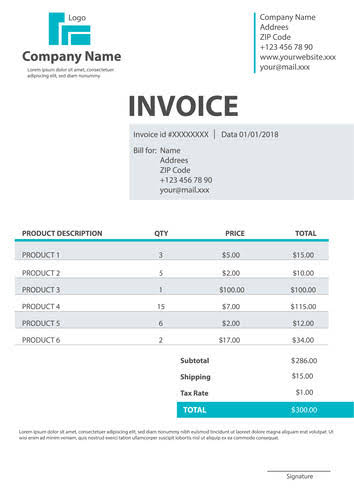
Free Construction Invoice Template :: Skynova com

How to Write Construction Invoice

Create the perfect invoice for your business with our Online Invoice Generator. Just about every construction contract will require that work be done in a “workmanlike manner.” But what exactly does that… The practice of retainage, aka retention, has a tremendous impact on the construction industry. The steps required in a project’s journey to completion are importation to how successful the project will be. It’s incredibly important to prioritize communication and documentation when back charges…

Construction Invoice Best practices

There are a number of steps construction businesses should take before, during, and after any project to ensure payment is fast and smooth. We’ve created customizable construction invoice templates for some of the most common construction contract types. Feel free to use them as is, or adjust them to your company’s needs. The invoicing process will vary based on the contract agreed upon between the owner and the general cash flow contractor, but larger construction projects will most likely be on a progress billing structure. A successful construction invoice provides a client with a detailed breakdown of materials, labor, and miscellaneous costs.

  • At the end of the project, they can easily calculate how much was to total expense as well as record the cash flow.
  • Payments may be made via bank transfer, check, or construction financing options.
  • Electricians can bill for maintenance services, wiring installations, emergency repairs, and more with customizable electrician invoice templates.
  • My GC and I had a personal dispute, (the GC failed to pay me for 5 months on an unrelated job for the State of Arizona, and my “letter of intent to lien” gave notice to all interested parties…
  • Contractors may send one before any work begins to request a deposit or payment up front.
  • These are typically a bundle of documents with all the relevant information to support the release of payments.
  • Timely and precise invoicing ensures that funds are available for ongoing expenses, including payroll, materials, and equipment rentals.

Invoice for construction work using progress billing.

You can always save your initial template as a Word Doc in case you want to edit your invoices or add more details in later. But when you send invoices off to your clients, it’s best to send it as a PDF so that they can’t do any edits on their end. The same business information as your contact info, plus the name and department of your billing contact.

How to Write Construction Invoice

Photo Documentation

If you’re looking for the fastest, most convenient way for your customers to pay you, you’ll need to know how to accept payments online. They serve as a record of the customer’s order and are used as part of the approval process, while invoices are a record of the receipt of the products or services and the payment terms. So, an invoice will usually reflect terms agreed to via purchase order. Once you tailor your construction invoice template to your needs, there are fewer opportunities for mistakes. You’re less likely to forget certain materials or labor when you’re looking at a well-organized template. This free invoice template was designed for use on construction projects where you are working under a lump sum contract.

How to Write Construction Invoice

How to Write Construction Invoice

Whatever provides a gentle reminder that a payment is coming up (and how to pay it). Also, your invoice may include information from your credit policy, like payment terms and penalties for late payment. Lump sum and unit price are less concerned with individual materials and more concerned with overall amounts and percentages. Procore is committed to advancing the construction industry by improving the lives of people working in construction, driving technology innovation, and building a global community of groundbreakers. Our connected global construction platform unites all stakeholders on a project with unlimited access to support and a business model designed for the construction industry. A company’s set of values may seem like a far-fetched connection to the day-to-day work on a jobsite, but in reality, a construction company’s values play into every part of…

How to Write Construction Invoice

Similar to the last example, all costs are again passed onto the customers here. For example, if 30% of a project is complete in a month, you will get 30% of the total job cost in that period. Progress-based billing is a little more complex – because it’s designed https://www.bookstime.com/ to spread your income over the length of a project.

How to Write Construction Invoice

  • This free invoice template can be used on projects where you are working under a cost plus contract.
  • This also means that everything should be absolutely clear to your clients.
  • Additionally, keeping organized records of correct coding can help solve disputes between owners, contractors, and subcontractors.
  • Please guide us what is an average timeframe from day one today to Foreclose?
  • Obviously, that’s much quicker than the industry norm, and payment won’t come that fast for the majority of construction businesses.
  • They let you know how much cash you currently have and how much income you can expect once outstanding invoices are paid.

It is also a formal document you can reference in the case of litigation or a dispute. T&M billing charges clients based on actual labor hours worked and materials used. This method is flexible but requires detailed tracking to avoid disputes. Work PerformedAfter covering the basics, it’s time to move on to the specifics of the job. Include details and pricing for any products used in the construction process and any service or labor that has been performed.

Utilize Construction Invoicing Software

Recognizing the challenges involved in construction invoicing, we have put together this in-depth guide on how to create construction invoices. In the heavy construction sector, where tasks are complex and range from earthmoving for new roads to laying down infrastructure for utilities, construction invoices must be specific, clear, and accurate. This detailed invoicing is essential to justify the costs and progress of a construction invoice project to those who may not be familiar with the construction process. Our detailed template allows you to bill your clients based on any of these terms.